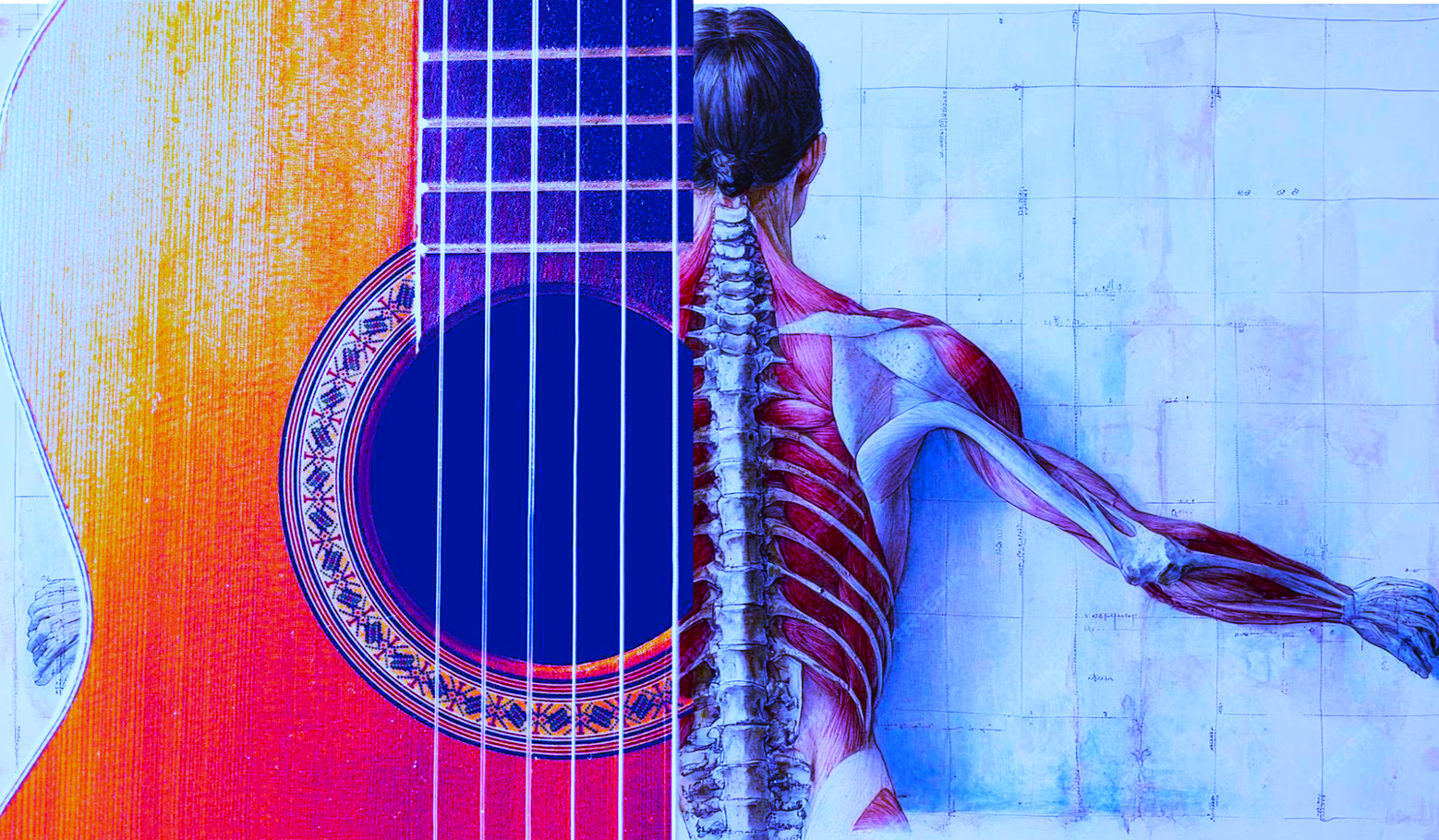
THE BODY IS A MUSICAL SCORE
The world was created with the word, and the word is vibration.” Man was also created with the word of God, and that is why sound is so important in our lives; it influences our physical, emotional, and mental well-being. But what is sound, and what is sound vibration?
Sound
In the world we live in, we are surrounded by sound. We can hear the singing of birds, the sound of a piano, or the voice of a person speaking, as well as the annoying noise of car traffic. Sound is a physical phenomenon perceived by the ear. But how is it produced? What produces it? How does it propagate?
Vibrations and Sound
If we hear a sound, we think that there must be something producing it. If we hear the sound of a bell, we know that it comes from a blow that has been struck. By bringing our hand closer and gently touching the bell, we can feel how the metal mass is vibrating, but if we press our hand firmly and prevent it from vibrating, the sound stops. If we touch our throat while speaking loudly, we will also notice that it vibrates, or to make a guitar string sound, we must make it vibrate. From this, we can see that sound is produced by a vibratory movement.
If we place a ringing bell inside a glass bell jar, when we remove the air, we can see that the sound slowly fades until we hear nothing, and if we let air in again, the sound is perceived with increasing intensity. That is, sound needs a material medium to propagate, whether it is liquid, solid, or gaseous; sound does not propagate in a vacuum.
You can hear the sound of a boat engine when swimming underwater, or the sound of a moving train if you place your ear near the rails. Sound propagates in liquids at a greater speed than in gases, and in solids at a greater speed than in liquids.
The speed of sound in air at 15°C is 340 m/sec, in fresh water it propagates at a speed of 1,435 m/sec, and in solids, such as iron, at a speed... 15 times greater than in the air.
Qualities of sound
Sounds are different from one another; they can be soft or loud, high-pitched, low-pitched, pleasant or unpleasant. The qualities that characterize sound are its intensity, its pitch or tone, and its timbre.